The Saturday children's clinic and correction of bone deformities.
Overview
Why does early treatment matter?
Young children's bones are very soft and easy to straighten without major surgery, usually using a special brace and exercises. If treatment waits until the child is older, it can become harder and require major surgery.
What parents should look out for
Feet turning inwards or outwards from birth.
A child who limps or walks unusually when they start walking.
A difference in length between the two legs.
Saturday clinic
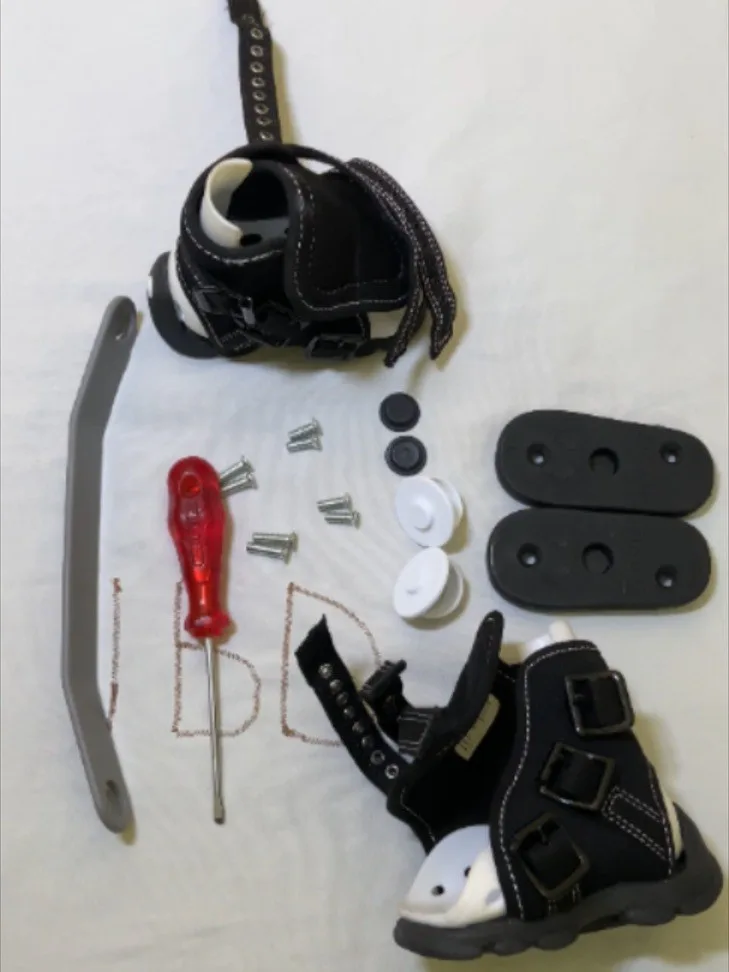
Every Saturday the doctor performs clubfoot correction for children.
Conditions Treated
Conditions Treated
Congenital Deformity Correction in Pediatrics
Clubfoot, hip dysplasia, bowed legs and other conditions in children.
Children may be born with or develop conditions that affect bone growth, joint position, limb alignment, or movement. Examples include clubfoot, developmental hip dysplasia, bowed legs, knock knees, limb deformity, growth-plate problems, and other pediatric orthopedic conditions.
Treatment depends on the child's age, diagnosis, severity, growth remaining, symptoms, and effect on development. Nonsurgical options may include observation, stretching, casting, bracing, orthoses, and physical therapy. Some conditions require surgery, such as guided growth, soft-tissue procedures, osteotomy, fixation, or reconstruction.
Treatment plans are designed to protect growth plates when possible and to support safe development of strength, balance, walking, and everyday function. Parents and caregivers are involved in decisions, follow-up, home care, and rehabilitation.
Children with complex congenital or metabolic conditions may benefit from coordinated care involving pediatric orthopedics, physical therapy, orthotics, genetics, endocrinology, or other specialists. Early evaluation is important when there is progressive deformity, pain, walking difficulty, loss of function, or concern about asymmetric growth.
Deformity Correction in Adults
Realigning an arm or leg that is bent or out of line.
Fractures that healed in an abnormal position, advanced arthritis, previous surgery, or progressive bone and joint conditions can cause deformity of the arm or leg. Misalignment may lead to pain, difficulty walking, uneven loading of a joint, reduced movement, or faster wear in certain parts of the joint.
Assessment may include a detailed physical examination, evaluation of gait and limb function, measurements of limb alignment, and standing or specialized radiographs. Additional imaging may be needed to understand rotational deformity, joint damage, or the condition of previous implants.
For selected patients, treatment may include observation, physical therapy, shoe modifications, bracing, hardware removal, corrective osteotomy, joint replacement, or another reconstructive procedure. Surgical realignment is planned according to the patient's symptoms, deformity, bone quality, joint condition, expectations, and rehabilitation capacity.
Recovery may require a period of protected weight-bearing and structured rehabilitation. The expected benefits and limitations should be discussed individually because correction of alignment does not guarantee complete relief of pain or restoration of normal movement.
Limb Length Discrepancy
When one arm or leg is shorter than the other.
A difference in limb length may be present from birth or develop after a fracture, growth-plate injury, infection, tumor treatment, joint disease, or another condition. Some differences cause no symptoms, while larger or progressive differences may affect walking, posture, balance, or joint loading.
Assessment may include a clinical examination, gait assessment, measurements taken while standing, and imaging to determine the true bony difference. In children, the evaluation also considers growth remaining and the expected difference at skeletal maturity.
Treatment may include observation, periodic measurements, shoe lifts, customized footwear, physical therapy, growth-guidance procedures, shortening procedures, or gradual limb lengthening. The appropriate treatment depends on the cause, size, location, progression, age, bone quality, symptoms, and functional effect.
Limb lengthening is a complex process that may involve an internal lengthening device or an external frame, along with frequent follow-up and rehabilitation. It may require several months of treatment and carries risks such as stiffness, infection, nerve or blood-vessel problems, delayed bone healing, and the need for additional procedures.
Procedure
Treatment (Dr. Abdulkadir's method)
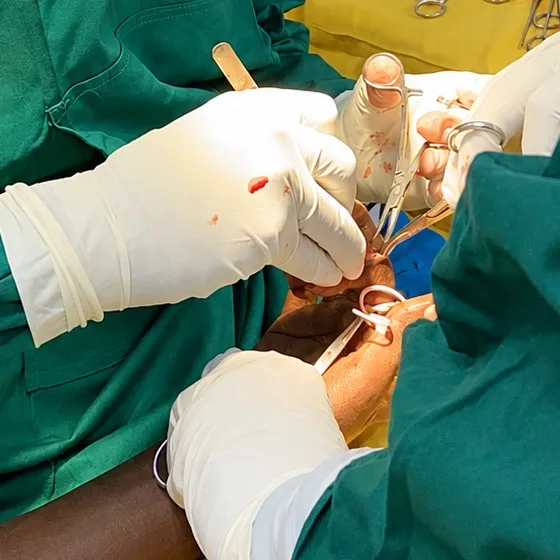
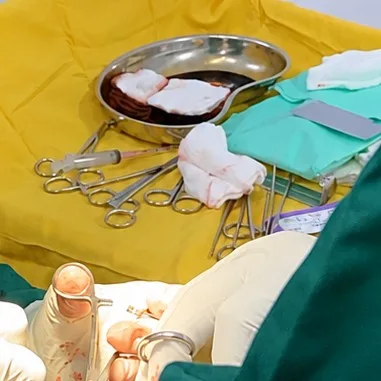
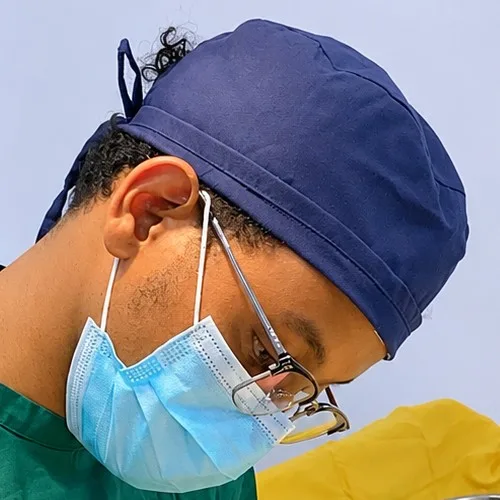
Surgery in progressSterile surgical instrumentsDr. Abdulkadir at work