Joint replacement, bone health evaluation and metabolic bone disorders.
Conditions Treated
Conditions Treated
Arthroplasty (Joint Replacement)
Replacing a badly damaged joint to reduce pain and improve movement.
Advanced arthritis, previous injury, joint deformity, or progressive wear of the joint can cause pain, stiffness, reduced walking ability, and difficulty with everyday activities. Joint replacement may be considered when symptoms continue despite appropriate nonsurgical treatment and imaging confirms significant joint damage.
During arthroplasty, damaged portions of the joint are replaced with artificial components made from materials designed for use inside the body. Depending on the condition, replacement may involve the hip, knee, shoulder, or another joint.
The goals of surgery are to reduce pain, improve mobility, and support daily function. The degree of improvement and the speed of recovery vary between patients. Factors such as age, muscle strength, bone quality, general health, weight, activity level, and adherence to rehabilitation can influence the outcome.
Treatment may include preoperative evaluation, medical optimization, surgical planning, postoperative pain management, walking or movement precautions, and structured physical therapy. Implant selection and surgical technique are individualized rather than identical for every patient.
Bone Health Evaluation
Checking bone strength and fracture risk.
Bone strength can be affected by osteoporosis, osteomalacia, nutritional deficiencies, endocrine conditions, kidney disease, certain medications, low activity levels, and other medical disorders. Poor bone health may increase the risk of fractures or affect the stability and healing of orthopedic procedures.
A bone-health evaluation may include a medical history, fracture history, medication review, family history, physical examination, blood tests, radiographs, and bone-density testing when clinically indicated. The exact evaluation depends on the patient's age, symptoms, fracture history, and risk factors.
Treatment may involve correcting a documented deficiency, improving nutrition, supporting safe weight-bearing exercise, reducing fall risk, treating an underlying medical condition, or using prescription medication when indicated. Nutritional supplements are not appropriate for every patient and should be based on clinical assessment.
Bone health can be particularly important before complex fracture fixation, joint replacement, spinal fusion, or deformity correction. Patients with suspected metabolic bone disease may require coordinated management with endocrinology or another specialist. Surgical care for metabolic bone disorders is often best coordinated between the orthopedic and medical teams.
Metabolic Bone Disorders
Osteoporosis, osteomalacia and other conditions that weaken bone.
Metabolic bone disorders affect the strength, structure, mineralization, or remodeling of bone. Examples include osteoporosis, osteomalacia, Paget disease, vitamin D disorders, calcium or phosphate abnormalities, and less common inherited or endocrine conditions.
These disorders may cause fractures, bone pain, muscle weakness, abnormal bone shape, reduced height, or difficulty healing after an injury. Some patients have few symptoms until a fracture or abnormal laboratory result leads to further evaluation.
Assessment may include blood and urine testing, radiographs, bone-density testing, review of medications and medical conditions, and evaluation for an underlying endocrine, kidney, nutritional, or inherited cause. Treatment depends on the specific disorder rather than on bone-density results alone.
Management may include medical treatment, nutritional correction, exercise and fall-prevention strategies, fracture treatment, and orthopedic surgery when deformity, instability, or severe pain affects function. Complex cases may require collaboration between orthopedics, endocrinology, nephrology, genetics, rehabilitation, and other specialists.
Procedure
Procedure
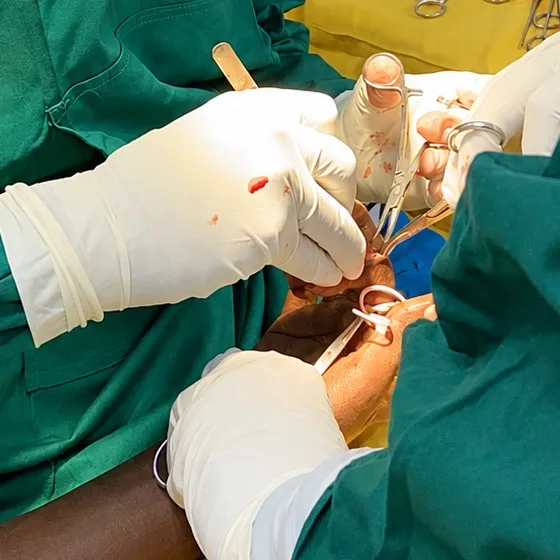
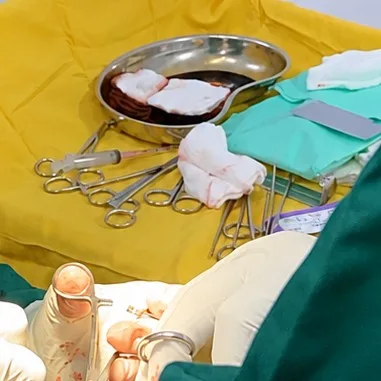
Surgery in progressSterile surgical instrumentsDr. Abdulkadir at work